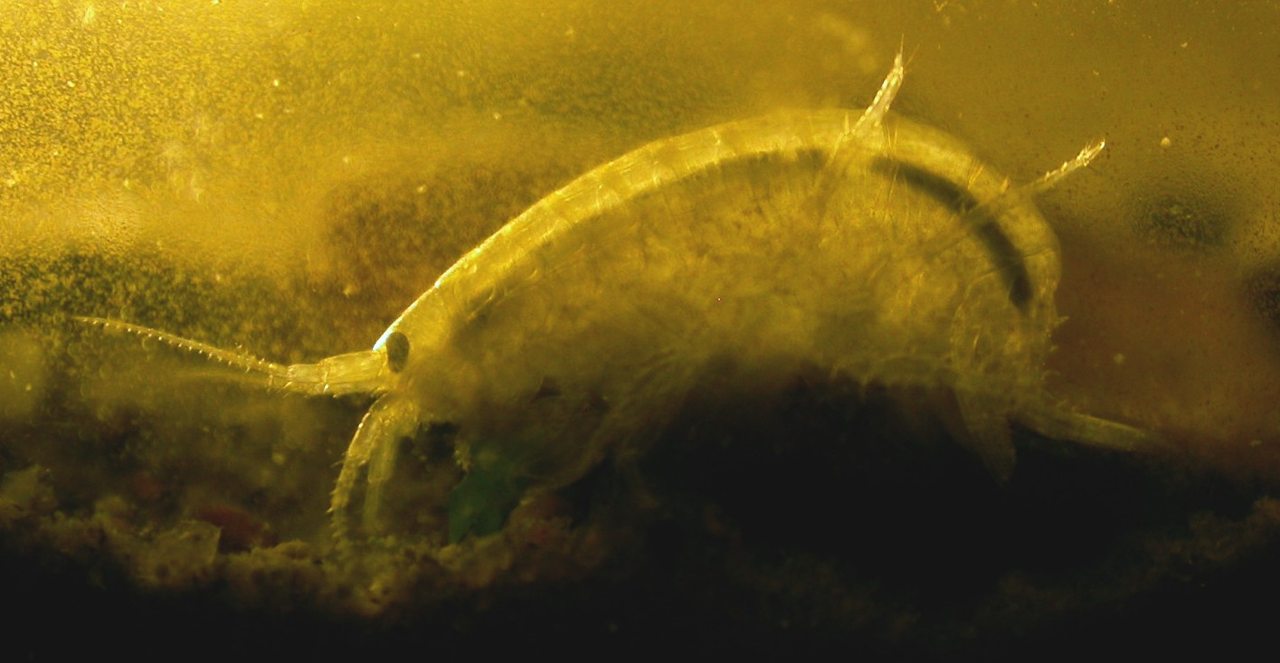
The biology of Lake Sevan’s gammarids
A. K. Markosyan · 1948 · Pages 40 to 74
Биология гаммарусов озера Севан
Read or download the original PDF (166 MB)
View the library record
In short
These tiny, shrimp-like animals help feed Lake Sevan’s trout. Markosyan studied where they lived, how they reproduced, and how their numbers changed with the seasons. The main sampling ran from April 1938 to October 1939, around Noratus.1
What the study found
- Gammarus lacustris lived mainly among moss and stoneworts at depths of 7 to 13 meters, as well as along rocky shores and in bays.
- In winter, many moved from freezing shallows into the stonewort beds.
- Breeding lasted from April through November; young animals became especially abundant in June.
- The amount of gammarid life in the stonewort beds varied strongly through the year. The author linked the spring decline to feeding by trout.
These are findings from the historical study, not a survey of the lake today.1
The author’s conclusions
The library record has no abstract. The paper’s conclusions appear on printed pages 70 to 71 in Russian and 73 to 74 in Armenian.
Read the Russian conclusions · Read the Armenian conclusions
The short summary above is our English explanation, not an abstract quoted from the author.