This page continues
The contest design and the starting conditions are pages of their own.
Designing the contest
Voting, categories, the calendar, and the five things the big contests do that a first Armenian round should not.
What it would take to start
The seven conditions, who pays, four facts about this country that cut the cost, and the finding that the expensive path is mostly unnecessary.
What the club is for
Four things, and a contest is not one of them.
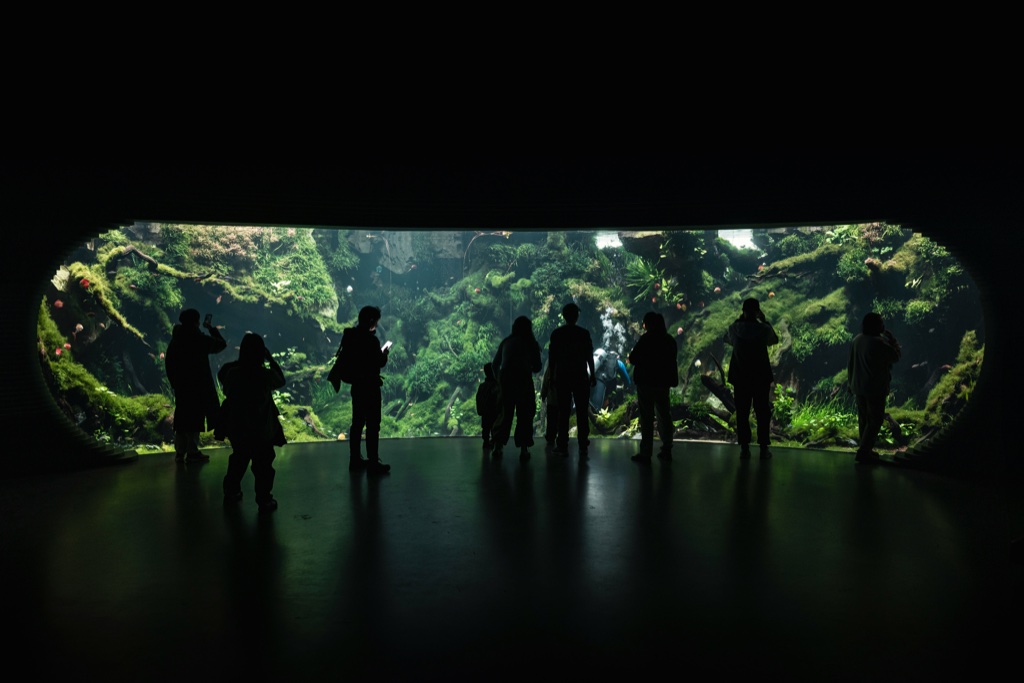
The reason to start a club here is not that Armenia is missing a trophy. It is that everything anyone in this country has ever learned about keeping a planted tank has stayed inside one person's head. There is no forum, no registered society and no meeting1, so every algae problem solved here was solved alone and the answer died with the tank. A club is the cheapest possible fix for that, and it needs a table and four people rather than a budget.
In person where that is possible and online where it is not. The measure of a first year is not entries received, it is whether people who had never met now recognize each other. Everything else on this page is downstream of that one thing.
The first meet needs four people and a tableIncluding disagreeing. Most of what the hobby repeats in English is unsourced and some of it is demonstrably wrong. A room where somebody can say that a rule came from one forum post in 20092 and be argued with is worth more than a room where everybody agrees.
Bring the tank that is not workingThe country has no domestic pool of experienced judges and never has34, which means nobody here is going to be taught by an authority. People will have to teach each other, in public, with the reasoning shown. That is slower and it is more durable.
One person explains one thing they got wrongStated plainly because it keeps getting left off lists like this one. The Dutch federation, which has run the most rigorous judging tradition in the hobby for decades, describes taking part in it as enjoyable and instructive5. That is the correct order of those two words.
Nobody is grading the trimmingsAnd then two projects, because a club with no project talks about meeting and never meets. The first is a tank built together and entered into a world contest, which is the joint project. The second is a photograph strand that can start this year with no tank, no venue and no money, which is the photograph strand. Both exist to give the meeting a reason. Neither is the point of it.
The size of the scene
Small scene, and this is the part worth saying carefully, because it cuts both ways and only one of those ways is usually mentioned.
The whole addressable community in Armenia is one Facebook group of about 7,900 members6, and it is a general fishkeeping group rather than an aquascaping one. The number of people in this country who plant a tank on purpose is a fraction of that, and nobody knows the fraction.
The cost of that is real. A format that needs fifty entries to look respectable will not get them, and with one group and no regional circuit behind it, a bad first year is visible to everybody at once.
The advantage is larger and it is structural. At this size everyone can genuinely know everyone. A new person is not entry 1,400 in a queue, they are somebody whose name the other members learn in a month. Feedback can be written to every single entrant rather than to the top hundred, which is exactly what the largest contest in the world cannot do, because below rank 100 nothing is scored by a judge at all7. Small is the reason the good version of this is affordable.
So the design rule for everything that follows is: build the format that works at ten entries and is still pleasant at a hundred. That ten is our own judgement rather than a measured figure, but it follows from the arithmetic above, and a format designed for ten reads as a beginning either way.
What one actually gets
Why a club, and why now
The case for a club was not invented here. The whole starting line is still empty.
A forum, a club, a show, a contest. Those are the ordinary furniture of a hobby this size, they were searched for in Armenian, in Russian and in English, and all four are still jobs waiting for somebody. That is the argument for starting one, and it is the only time this page will make it.
The international record says the same thing from the other direction. The IAPLC publishes a world ranking with a country against every ranked entry: 2,617 entries from 84 countries and areas in 2021, and 1,533 from 77 in 20253, with the AGA archives running alongside it back to 20004. Russia, Turkey, Ukraine, Belarus and Iran are all in there. Armenia has not appeared yet.
The honest reading of that is not that Armenians cannot aquascape. It is that nobody here has ever had anywhere to send a photograph. The first Armenian to enter anything will be the first, and that is a strange and rather good position to be standing in.
Counted, in three languages
- 0
- aquascaping contests ever held in Armenia, as far as any record we could reach shows1
- 0
- Armenians ever ranked at the IAPLC3 or the AGA4
- 0
- registered aquarium clubs or societies1
- 0
- aquatic entries on the national exhibition calendar1
- 7,900
- members of the one large Facebook group, which is the whole addressable community6
There is a second reading of those zeros that matters more than the first. A hobby with no contest has no shared standard, so nobody can tell whether they are getting better. A hobby with no club has no way of moving what one person learned into the next person's head. Every Armenian who has ever solved an algae problem solved it alone, and then the solution died with the tank. That is the actual cost of the gap, and it is a much bigger cost than a missing trophy.
The joint project
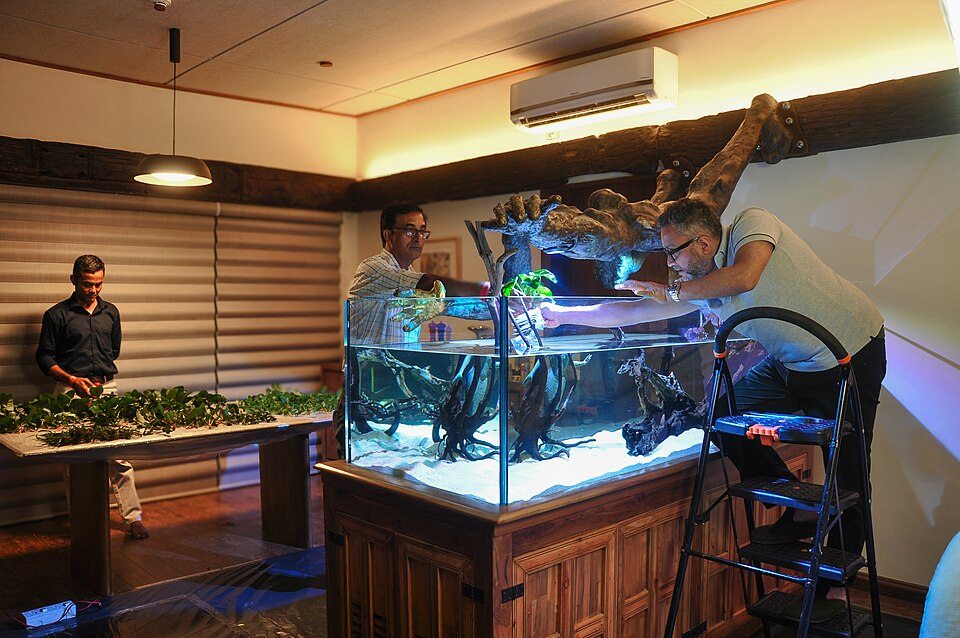
One tank, built by the club together, entered into a world contest. The entry is the achievement, and the placing is a detail.
This is the project the club should carry, and the reason is the documented gap. Across the IAPLC world ranking of 2,617 entries from 84 countries in 2021 and 1,533 from 77 in 2025, the string Armenia appears zero times3, and the AGA archive returns the same nothing4. Russia, Turkey, Ukraine, Belarus and Iran are all on those lists. So the first photograph sent from this country is the first, whatever number comes back next to it, and nothing about that depends on winning.
Building it as a group rather than alone is the part that makes it a club project instead of one person's hobby. One tank, one room, several pairs of hands over several months: somebody sources the stone, somebody grows the plants out in advance, somebody runs the water tests, somebody learns to photograph glass. Every one of those is a skill that stays in the country afterwards, which a solo entry does not achieve.
The IAPLC charges nothing to enter and sets no limit on tank size9. The AGA also charges nothing and allows up to three aquascapes per person, with one aquascape per physical tank per year since 202310. The barrier to a first Armenian entry has never been the entry fee.
Cost of entering: the postage on nothingThe IAPLC wants the whole tank from the front, with no cropping, no mirroring and no retouching9. The AGA asks for the camera original alongside the entry and publishes exactly which edits are allowed and which are not10, having disqualified a group of entries in 2020 and named the techniques it found11. Learning to shoot to that standard is a club skill nobody here currently has.
Read the rules first, build secondThe IAPLC publishes its judging criteria, and one 2021 judge described the habitat criterion as worth 50 of the 100 points12. A group that reads that in advance builds a different tank from a group that reads it afterwards. This is the single most useful thing a club can do that an individual usually does not bother to do.
Habitat, not decorationThe IAPLC rule is one entry per person per year9, and the published rules are written for an individual entrant. Whether a tank built by a group can be entered as a group, or must go in under one member's name, is not something we have found an answer to in the published guidelines. It has to be asked of the organizers before anyone starts, not afterwards, and the answer should be published here when it arrives.
Ask ADA in writing, before the buildA group tank lives in somebody's flat1, and that person carries the water changes. That is a real thing to ask of a volunteer and it should be asked out loud, with the others taking the weekly work in turns rather than turning up for the photograph.
Whoever hosts it does not also host all the workThe IAPLC is the larger and the harder. The AGA splits its main class by tank volume, which is why small tanks show up in its results at all13, and it is the more forgiving first target. The AGA is also the one contest where the organizer holds sub-licence rights and can therefore grant permission for images itself7, which matters for the calendar. Entering both in the same year is allowed and costs nothing extra.
Two deadlines, one tankOne caution about dates. Both contests publish their own entry window each year and both have moved it. Nothing on this page should be used as a deadline. Read the IAPLC application page9 and the AGA guidelines10 in the year you intend to enter, and note that a planted tank needs months of growing in before it photographs well, so the real deadline is always earlier than the stated one.
The photograph strand
The part that can start now. It needs a tank you already own, a phone you already own and nothing else at all.
Everything in the joint project takes a year. This takes a month. A photograph strand needs no venue, no legal entity, no hall and no equipment, which is precisely why it should run first: it is the thing that proves the club can finish something. The format below is the site owner's, drawn from a Facebook group for growers of the orchid Neofinetia falcata which he reports ran it for several years14. It is not our invention and it has been used in a community of roughly this size before.
How it runs, in five lines. Gifts are announced before entries open. Entries are collected until a stated deadline. Everything accepted goes into one Facebook post after that deadline, all entries together, nothing published early. The top three are the three with the most likes and engagement on that post. The results, and the names, stay published afterwards.
The entry rules
Hold your own photograph up against them, one line at a time.
- You give permission to use the photograph. Entering is the permission. You keep the copyright and you always keep the credit; what you grant is a non-exclusive licence to publish that image in the contest post, in the results, in the archive and in the calendar. No resale, no sub-licensing, no use in anybody's advertising. For comparison, the AGA leaves copyright with the aquascaper but takes an irrevocable, perpetual, royalty free and sub-licensable licence15, and the 2018 CIPS rules state that the copyright of the top 100 entries belongs to the organizers16. This asks for less than either. If the photograph is not yours to license, do not enter it.
- Nothing else in the frame. The aquarium and only the aquarium. No hand, no cat, no window, no room behind it, no watermark, no caption burned into the image, no collage of two shots. The reason is not fussiness: the moment a frame contains a living room, half the judgement is about the living room. The IAPLC asks for the whole tank from the front for the same reason9. Crop before you send, or hang a dark cloth behind the tank and shoot square on.
- Clean. Glass wiped inside and out, no algae film on the front pane, no visible dust, no trailing cables or suction cups across the view, no food on the surface, no bubbles clinging to the glass. Turn the filter off for the shot, wait for the surface to settle, and check the corners of the frame before you send it rather than after. Most rejected photographs are rejected on this rule and every one of those rejections is preventable in ten minutes.
- Sharp. In focus on the plane of the front glass, taken with the phone braced or resting on something solid rather than held out at arm's length. Room lights off, tank light on, and no flash, because a flash off glass returns a white disc and nothing else. If it looks soft on your own screen it will look worse on everybody else's.
Volume, substrate, light, water source and its measured hardness, weekly minutes, age of the layout, and one honest sentence about what went wrong. It is not a rule, it is not scored and an entry without one is accepted exactly the same. It is asked for because a hundred honest Armenian build notes would be the most useful document this hobby has ever had here, and unlike a photograph it keeps working after the tank is broken down.
Optional. Five lines, written badly, is fineRules 03 and 04 will make somebody ask how much they may edit. The AGA has already answered this in public and its answer is worth borrowing: color correction, lens and distortion correction, rotation, brightness, shadow and highlight, contrast and sharpness are allowed10, while cloning flaws out, compositing a better school of fish from several frames and painting color onto plants are not. The AGA disqualified a group of entries in 2020 for exactly those techniques and published what it had found11. Nobody is going to audit a friendly first round, which is precisely why the line should be stated rather than assumed.
Correct the photograph, do not build a different tank in itWhat is not in the rules, deliberately. Nothing about tank size, price, equipment, brand, plant count or how long the tank has been running. A jar on a windowsill and a meter of glass with injected carbon are held to exactly the same four lines, and the four lines are all about the photograph rather than the budget behind it. That is the whole reason this strand can open to everybody in a country where no premium brand is stocked at all81.
How to hear when this starts
There is one thing to do on this page, and it is to get on the list.
Everything above depends on being able to tell people when entries open, what the gifts are and where the first meet is. A page cannot do that. A list can, and a list is the only piece of infrastructure this whole proposal actually needs, because it is what turns a document into an invitation.
The address for that list is being set up, and until it is live the Facebook group does the same job. The box below says what the list is for and where to raise your hand today. When the channel exists it appears in that box, and the wording around it will not change.
Join the contact list.
What you would get. One message when entries open, with the categories, the deadline and every gift named. One message when the results post goes up. One message when there is a meet, and one when the calendar is printed. Nothing else, ever, and no message that is trying to sell you anything.
Where to write. Write to @aquascaping.am on Instagram, which reaches the same people faster than any inbox would. The group below is where the day-to-day conversation happens.
What to do in the meantime, which does work today. The one large Armenian aquarium group on Facebook has about 7,900 members and is active6. Post there, or say in a comment that you want to be told when this starts. That group is where every person this page is addressed to already is, and it costs nothing to be findable in it. facebook.com/groups/AquariumistClubArmenia6
Where to go next
Here is the order to read this site in if you intend to build something and enter it.
Easy setups
Six costed low effort builds with their weekly minutes and their failure modes. Pick one and stop reading. This is the page that decides whether you have a tank at all.
The pond jar
An ecology experiment for the price of a jar, and the cheapest possible route into every idea on this site. Also the best thing to put in front of a child.
The windowsill tank
Why 15 cm of water needs no air pump and no injected carbon, worked from the physics rather than asserted. The argument that removes most of the shopping list.
Find a hardscape
Thirty four materials, which of them are collectable here, which will harden your water, and the vinegar test that tells you which is which before it goes in the tank.
Find a plant
Every plant actually buyable in the country with its price in dram, its light and carbon needs, and whether it will tolerate the water coming out of your own tap.
Find a fish
What is really for sale here, what it will grow into, and the species routinely mis-sold. Read this before the contest, not after the fish is in the bag. It is also the file the fish categories were checked against.
Styles and history
Iwagumi, Dutch, nature aquarium, biotope. What each style is actually trying to do, and where the Dutch criteria come from, including the ones that turn out to be one forum post.
Science
The cycle, light, carbon and algae, with the papers behind them. The reason the criteria can be argued about rather than merely obeyed.
Competitions
How the IAPLC, the AGA and the CIPS contest are really run, judged and photographed, with the entry rules that decide whether an Armenian can enter at all.
Winners
Who has won what since 2000, with tank volumes attached. The evidence that a small tank is not a handicap, and a useful cure for the idea that these people are a different species.
The Armenian scene
What is stocked, what is not, what it costs and what the market cannot supply. The constraint map every rule on this page was written against.
Community and shops
Every group, shop and maker we could verify, with the dates we checked them. The documented absence this whole page is answering.
- Armenian aquarium shops and community listings. The local groups, retailers, events, and fish availability described on this page, with direct links where they are public.
- Aukes, Marco. "Crash course Dutch style Aquascaping." UK Aquatic Plant Society forum, 15 to 18 November 2009. The origin of every metric Dutch rule circulating in English, including one species per ten centimetres of tank width, the finger's gap between groups and the rule against neighbouring groups at the same height, carrying the author's own opening disclaimer that it was his view and not necessarily the correct story. Archived copy
- IAPLC world ranking announcements and results tables, 2021 and 2025. Aqua Design Amano. The all-time record of 2,617 ranked entries from 84 countries and areas in 2021, the 1,533 entries from 77 in 2025, and the country column in which the string Armenia does not appear. iaplc.com 2021 announcement, 2025 announcement, iaplc.com/e/result
- AGA International Aquascaping Contest results and showcase archive. Aquatic Gardeners Association. Searched for Armenia across the archive and the 2025 results; zero hits. agaiac.org/2025/results, showcase.aquatic-gardeners.org
- Keuringen, Nederlandse Bond Aqua Terra, and the College Bondskeurmeesters The Dutch federation's home inspection system: trained volunteer judges, a written national guideline whose stated aim is the best possible living conditions for the animals and plants, three levels from club to national, and the federation's own description of taking part as enjoyable and instructive. nbat.nl/keuringen, cbkm.nl. Accessed 8 September 2026
- Ակվարիումիստների Ակումբ Հայաստանում / Клуб Аквариумистов Армении. About 7,900 members, Armenian and Russian mixed, active through 2026. Public group metadata only; the contents of the group were not read. facebook.com/groups/AquariumistClubArmenia
- IAPLC, AGA, CIAC, Biotope Aquarium Design Contest, and Dutch national competition rules. Prize levels, judging formats, entry requirements, and image-rights terms from each organizer.
- Gazanik category feeds and product pages. The shop's own published catalogue and its live category pages, 8 and 9 September 2026. Source of the plant prices from 300 to 3,000 AMD, the 34 plant lines of which 20 carry a published price, the 16 stones at 2,200 to 3,000 AMD per kilogram, the single driftwood listing in the country at 29,000 AMD, and the brand filter that shows which international brands are stocked and which are not. Individual prices are indicative and move. gazanik.am
- Guidelines and rules, 2026 edition. Aqua Design Amano, 2026. Free entry, one entry per person per year, no limit on tank size, the whole tank shown from the front with no cropping, mirroring or retouching, and the clause under which ADA retains the right to use entries for one year after the world ranking is determined. iaplc.com/e/application. Accessed 8 September 2026
- Rules and guidelines. AGA Aquascaping Contest, no date. Free entry, up to three aquascapes per person, one aquascape per physical tank per year since 2023, the camera original upload, and the lists of allowed and banned photographic edits. showcase.aquatic-gardeners.org/guidelines.html. Accessed 8 September 2026
- Frequently asked questions. AGA Aquascaping Contest, no date. The 2020 disqualifications and the named techniques the organisers found: compositing several images to build a better school of fish, cloning background elements to hide flaws, and adding elements from a different photograph. showcase.aquatic-gardeners.org/faq.html. Accessed 8 September 2026
- Judges criteria, and the 2021 Best Aquarium selection column. IAPLC, Aqua Design Amano. The published criteria, and the column in which judge Shogo Yamaguchi describes the habitat criterion as worth 50 points out of the 100 total. iaplc.com/e/judging_criteria, the 2021 column. Accessed 8 September 2026
- AGA showcase search index,
aquascapes.json, covering every entry from 2000 to 2023. The machine-readable index behind the AGA search page, and the file the tank volumes on this page were read from: Best of Show at 32 L in 2005 and 2006 and 54 L in 2012, and the third place in the 2011 Aquatic Garden class taken with a five litre tank. Two cautions the archive itself raises: 2006 carries two Best of Show entries, which may be a data error or a shared award and is unresolved; and the AGA publishes ranks 1, 2 and 3 in order but lists the entries after them by tank volume rather than by placing. showcase.aquatic-gardeners.org/aquascapes.json. Accessed 8 September 2026 - The site owner, first-hand account, 10 September 2026. Not a published source. The purpose of the club as getting together, discussing, learning and enjoying it; the joint entry into a world contest as the club project; the photograph strand and every part of its shape, meaning rights to use, nothing else in frame, clean, sharp, one Facebook post after the deadline carrying all accepted entries, the top three by likes and engagement, and gifts named before entries open; the report that a Facebook group for growers of the orchid Neofinetia falcata ran that format for several years; the report that a calendar has been made this way before, Armenian aquariums together with motivational shots from competition winners; the expectation of two to three Dutch entries; the categories as a list; and the intention to seek sponsors and gifts before publication. We tried to verify the Neofinetia precedent and could not. No published listing of such a club was found. Facebook group content and group history are not readable without an account, so the group could not be identified by name, its posts could not be read, and no year, membership figure or number of rounds is claimed anywhere on this page. This is recorded as testimony from one person, in the same way the Chekhov Street market is recorded on community and shops, and it is not dressed up as research. Anyone who can name the group is welcome to correct it. first-hand account, one person, unverified
- Photo release agreement. AGAIAC, Inc., no date. Copyright stays with the aquascaper; the AGA receives an irrevocable, perpetual, non-exclusive and royalty free licence to publish, reproduce, edit, crop and sub-license. Read in full rather than summarised, because it is the clearest published statement of what a contest asks of an entrant. agaiac.org/photo-release-agreement. Accessed 8 September 2026
- 2018 CIPS International Aquascaping Contest (CIAC). China International Pet Show, 2 March 2018. The fullest published statement of CIAC rules in English, including the categories and the clause that the copyright of the top 100 entries belongs to CIPS and CFAA. The detailed grading guidelines referred to in that announcement could not be found in English, and the entrant score visibility described on this page comes from the later CIPS results notices. en.cipscom.com. Accessed 8 September 2026
Continue
Where to go next.
Community and shops
Where the scene actually is today: one Facebook group of about six thousand people, and what it does and does not do.
The world competitions
What a contest looks like when it is run properly, judged and published. The thing a first Armenian round is measured against.
The shops directory
The doors to knock on. A club needs somewhere to meet and somebody to supply it.
The Armenian scene
The scene a club would sit in: one specialist shop deep, no distributor, and everything carried in.
Shoaling and schooling
Fin damage against group size has never been measured in an ornamental fish. It needs a camera, a scoring rubric and two years, and it is the most obvious open job in the hobby.