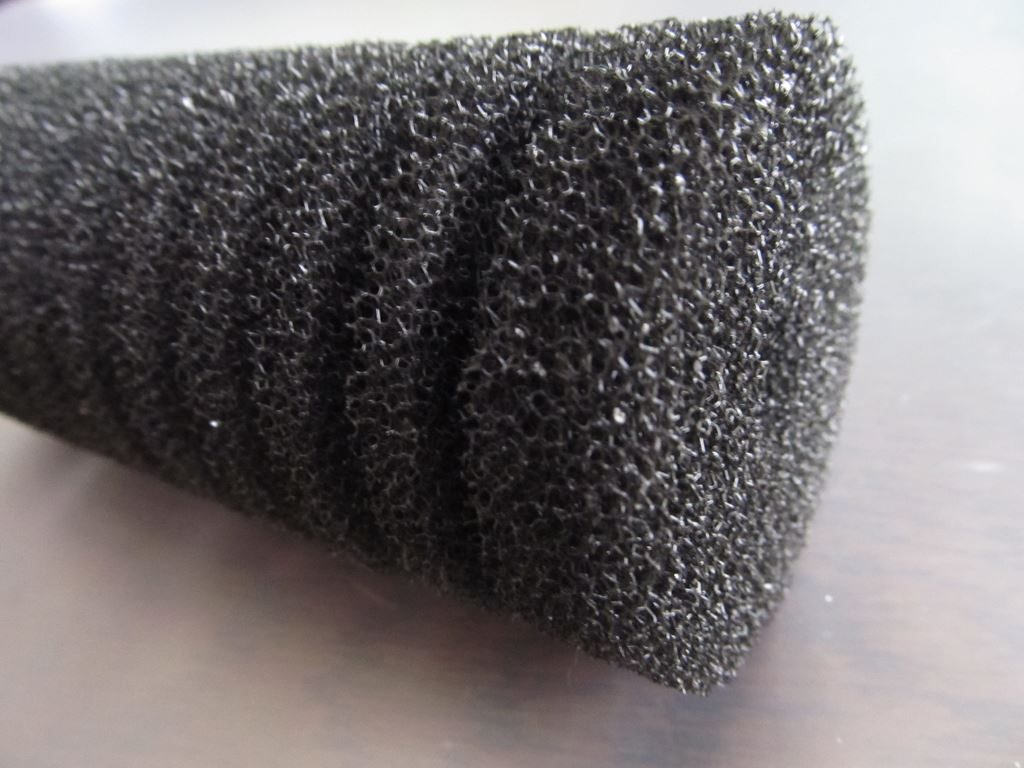
The filter
Nitrification is not two genera, and most of the filter is not doing it.
Open almost any aquarium book and it says the filter is run by two bacteria: Nitrosomonas turns ammonia into nitrite, Nitrobacter turns nitrite into nitrate. The second half of that sentence has been known to be wrong since January 1998, the first half is at best incomplete, and the two-organism shape of the whole model was broken in 2015.
Why everyone got it wrong is the more useful lesson. Before DNA methods, studying a bacterium meant growing it in a flask. A flask is rich in food, warm, stirred and free of competitors. Nitrobacter is a fast grower that thrives on plentiful nitrite and wins in a flask in days. Nitrospira is a slow grower adapted to scarcity, which is what a working filter is, and for decades it barely appeared in culture at all. The best studied member of the genus was only described and named in 1995.1 The organism that grows in a laboratory culture is not the organism that dominates in the real habitat.
Then somebody read the barcodes instead. A 1998 study built clone libraries of rRNA genes from freshwater aquarium biofilm, tracked the community as new tanks matured, and found no Nitrobacter at all. What it found was Nitrospira, at nearly 5 percent of all RNA extracted from the biofilm, appearing exactly when the tanks began converting nitrite.2 Aquaria dosed with a commercial Nitrobacter product grew no Nitrobacter; they grew Nitrospira, like the tanks that got nothing.2
The ammonia half turned out to be stranger. Already in 1996 the classic ammonia oxidisers were found in every actively nitrifying saltwater filter, at up to 20 percent of bacterial RNA, but in only two freshwater samples out of many.3 In 2011, ammonia oxidising archaea, a separate domain of life, were the more numerous ammonia oxidiser in 23 of 27 freshwater filters, and in 12 of those they supplied every detectable ammonia oxidising gene.4 The less ammonia in the water, the more the archaea dominate4, so a mature, lightly stocked, planted tank is the archaeal case, not the bacterial one.
And then the model itself broke. In 2015 two groups independently described organisms that carry out complete nitrification alone, ammonia straight through to nitrate with no partner.56 They are called comammox, and the joke is that they are themselves Nitrospira. Across 38 freshwater aquarium biofilter samples, comammox Nitrospira genes were present in all 38 and were the dominant ammonia oxidiser in 30; archaea were present in 35 and dominant in 7; classic ammonia oxidising bacteria were rare except in the tank with the highest ammonia.7 In saltwater biofilters, no comammox was detected at all.7
Two further findings belong here because they explain variation between tanks. Reactors seeded from working aquarium filters and fed different ammonia strengths grew four main ammonia oxidising strains rather than one, and which strain took over depended on how much ammonia it was fed; in a settled tank the Nitrosomonas marina-like organism made up 2 percent or less of visible cells.8 Stocking level is therefore not just a load on the community, it selects the community. And followed for four months, archaea outnumbered bacteria in all six freshwater tanks and were the only detectable ammonia oxidiser in three, while in the marine tank bacteria outnumbered archaea by three to five orders of magnitude9. The same archaea-plus-comammox core shows up in commercial freshwater recirculating aquaculture biofilters10, so this is not an artefact of small glass boxes.
So the honest current sentence is: in a freshwater home aquarium the ammonia step is most often run by a comammox Nitrospira or by an archaeon, and the same genus that was named as the nitrite specialist in 1998 turns out to do both steps. The full arc, the man who published the 1998 paper, and what that does to the bottled bacteria argument are on the cycling page.
Ammonia oxidisers as a share of the community, three home tanks at week 1211
- 1.6 %
- on the biofilter sponge, tank one
- 3.1 %
- sponge, tank two
- 3.8 %
- sponge, tank three
- 0.6-14.1 %
- the full range on bead media across the three
- 6 in 7
- is the weakest way of putting it: even at the most nitrifier-rich sample, 6 of every 7 organisms present are not ammonia oxidisers. On the sponges it is closer to 24 in 2512
The heterotrophs are not the enemy. They are the landlord, until they are the problem.
The relationship between the 96 percent and the 4 percent is not competition for the same food. Nitrifiers are chemoautotrophs: they take their energy from oxidising inorganic nitrogen and their carbon from carbon dioxide. Heterotrophs take both from organic matter. They eat different things, so the conflict between them is about space and oxygen rather than about nitrogen.
Most of the time that relationship is cooperative. Heterotrophic bacteria assist nitrifier establishment by forming the initial biofilm that nitrifiers then colonise11, and extracellular polymeric substances produced by heterotrophs measurably enhance nitrifying biofilm formation13. Heterotrophs build the house. Nitrifiers move in.
It turns hostile when the carbon supply rises. Heterotrophs grow several times faster than nitrifiers and respond to a pulse of organic carbon within hours. They thicken the outer biofilm, and a heterotrophic layer forming on top of a nitrifying biofilm cuts off the oxygen supply to the slow growers underneath14. Measured in an aquaculture biofilter at 2 mg/L of total ammonia nitrogen: raising the carbon to nitrogen ratio to 0.5 cut ammonia removal by 30 percent, and at higher ratios nitrification efficiency fell by 50 percent while the number of attached bacteria doubled.15 Twice as many bacteria on the media, half as much nitrification. That is an overfed tank in one line, and it is why "my bacteria died" after an overfeed is almost always wrong: the nitrifiers were smothered, not killed.
It also explains the pace of everything. Nitrospira is kinetically a scarcity specialist, with a low cell yield and a high affinity for oxygen relative to Nitrobacter16, and the archaea are the low ammonia specialists4. A community built of slow, low-yield organisms takes weeks to assemble and recovers slowly from being scrubbed off. Followed from scratch, three home aquaria had ammonia and nitrite undetectable by week 3 in two of them and week 8 in the third, with archaeal and comammox genes confirmed in all three by week 12.11
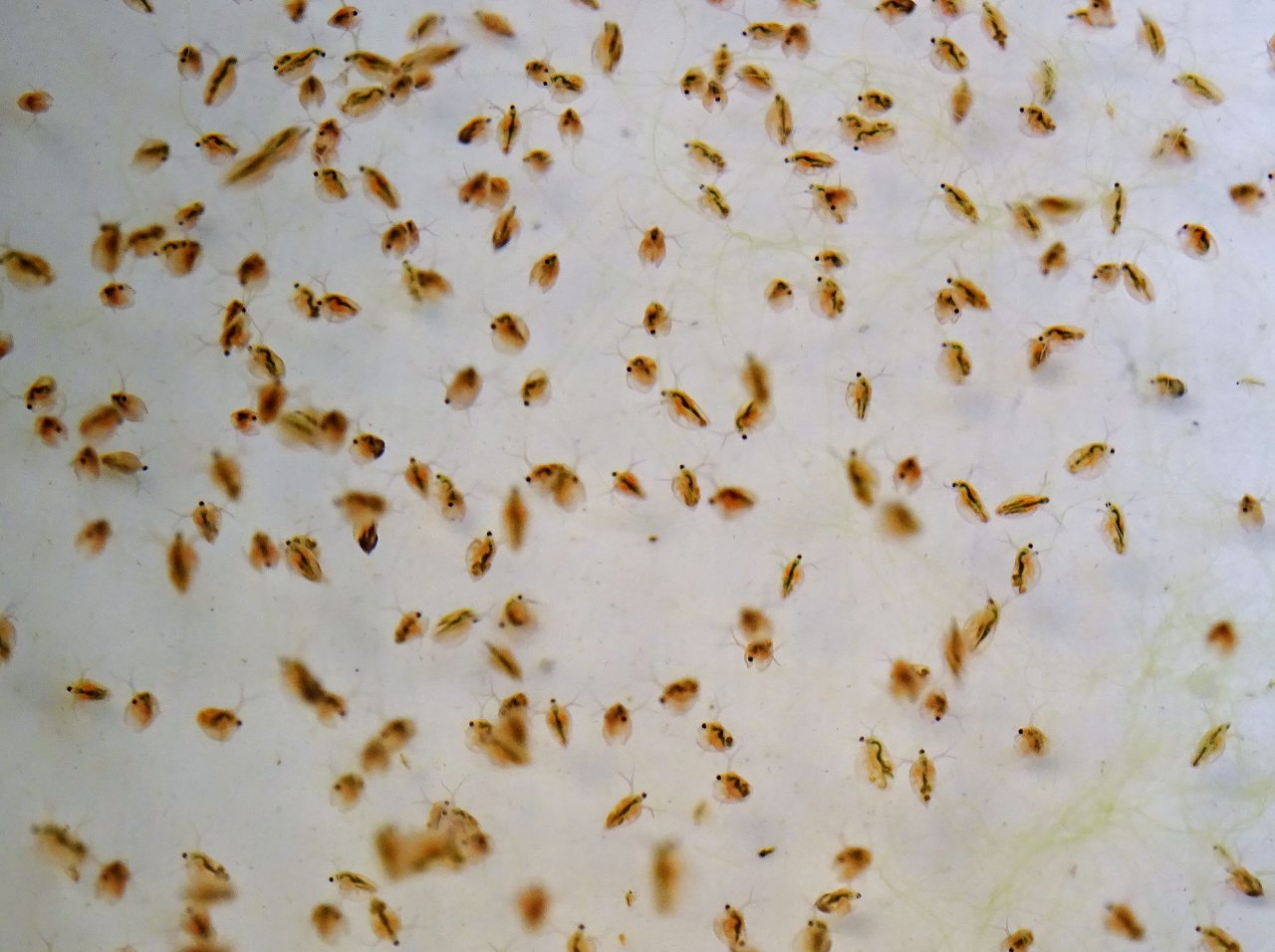
The fuel
Decomposition is the engine, and tannins are the brake fitted to it.
Nitrification is a nitrogen process. It is paid for by a carbon process running underneath it, and in most small water bodies that carbon did not grow there.
Leaves falling in from the bank are allochthonous organic matter, energy fixed somewhere else and delivered as coarse particulate matter, and the standard review of stream ecosystems treats litterfall, retention, storage and breakdown as the base of the whole system.17 A tank with driftwood, botanicals and dying leaves in it is running on the same import. A bare tank runs entirely on fish food, which is the same chemistry arriving in a bag.
The chain, in the order it runs
One, leaching. Soluble compounds come out of the leaf within hours and bacteria eat them. This is why a fresh infusion goes markedly turbid within forty eight hours from the development of countless bacteria18, and why new botanicals cloud a tank for a few days.
Two, conditioning. Fungi and bacteria colonise the leaf itself and begin on cellulose and lignin. Fungi and bacteria are the decomposers doing that work, and their relative importance and the controls on their activity are half of the standard review.17 Almost no animal can digest lignin. The microbes can.
Three, and this is the part the hobby gets backwards: the animals are not eating the leaf. A shrimp on a decaying leaf, an ostracod in the mulm, a snail rasping at driftwood, are all eating the microbial layer growing on it plus the fine particles coming off it. The leaf is a substrate, not a meal. That is why a conditioned brown leaf feeds a shrimp colony and a fresh green one does not, and why litter behaves as a slow release feeder rather than as food.
Four, the anoxic end. Where oxygen runs out, the same carbon goes down a different route. Sulfate reduction produces hydrogen sulfide, which forms ferrous sulfide with iron and shows as black colouration in sediment19, which is the black sand patch everybody worries about. In fresh water that route is small: seawater holds about 2,700 mg/L of sulfate and world average river water about 8 to 1120, and freshwater sulfate is two to three orders of magnitude below marine, penetrates less than 10 cm into the sediment, and methanogenesis rather than sulfate reduction dominates anaerobic carbon turnover in freshwater sediments21. Methanogenic breakdown of cellulose yields carbon dioxide and methane in equal amounts, at the end of a fixed redox sequence that consumes oxygen, then nitrate, then manganese and iron oxides, then sulfate.22 In two Danish lake sediments total dissolved sulfide was below the 2 micromolar detection limit in one and under 7 micromolar in the other, and was consumed at the boundary of the oxic zone21. The bubbles from an old dirted bed are mostly methane and nitrogen, not the poison of hobby legend.
Tannins are dose dependent, and at high dose they shut down the nitrogen cycle
The brown water is not cosmetic and it is not inert. A 140 day submerged decomposition experiment measured what tannin actually does to the community eating the litter.
The brown is a long phase, not a passing one. Tannin in the water rose sharply over the first 14 days and peaked there in almost every treatment, and by day 140 it was still 59 to 184 percent above the 2.51 mg per liter it started at.23 The litter itself lost 84 to 95 percent of its tannin content over the same 140 days.23
And the effect reverses with dose. A low tannin addition raised the decomposition rate of the other litter by 1.33 to 12.70 percent. A high addition lowered it by 6.21 to 6.82 percent.23 The mechanism runs both ways: at low concentration the breakdown products of tannin, gallic acid among them, are a usable carbon source that stimulates microbes; at high concentration tannins bind enzymes, precipitate proteins, disrupt microbial membranes and lock nitrogen into complexes decomposers cannot reach.23
The finding that joins this section to the last one. High tannin inhibits the nitrifying bacteria specifically, so ammonium accumulates instead of being converted.23 A tank stuffed with botanicals is not a gentler tank. It is a tank in which the slowest growing, most specialised organisms in the system have been chemically suppressed while the ammonia keeps arriving. Blackwater as a style is fine. Blackwater as a substitute for a working nitrogen cycle is a mistake with a measured mechanism behind it.
The dose reasoning applied to a two liter jar, with the collecting method and the log sheet, is on the pond jar page.
Tannin content of measured litter23
- under 20
- mg per gram is classified as a low tannin plant
- 18.69
- mg/g, Osmanthus fragrans litter
- 12.20
- mg/g, Canna glauca litter
- 2.51
- mg/L, the starting tannin concentration in the water
- 140
- days, and the water had still not returned to it
The plants
Root uptake substitutes for leaf uptake. It does not add to it.
A rooted aquatic plant has two mouths, one in the water and one in the mud, and they are not additive. Almost every argument in the hobby about soil, root tabs and carbon runs aground on that single fact.
First, the mechanism is real, and it has been photographed
Sediment is a carbon dioxide factory because the decomposition happens there. Measured pore water concentrations in lake sediments commonly run 10 to 250 times the air equilibrium value of about 16 micromoles per liter, and can exceed 5 millimoles per liter24, with the higher end of that range confirmed in flooded soil work25. So there is genuinely a carbon reserve down there.
And plants reach it. Planar optodes imaging single Lobelia dortmanna roots showed, in light, an oxygenated halo about 3 mm across, a carbon dioxide depleted zone about 2 mm across immediately at the root, and a carbon dioxide maximum about 2 mm further out where the released oxygen was stimulating microbial respiration. In darkness the depleted zone vanished within 2 hours.26
Read that as a loop, because it is the thesis of this whole page. The plant pushes oxygen out of its roots. The oxygen wakes up the bacteria in the millimeter around them. The bacteria respire and make carbon dioxide. The plant takes the carbon dioxide back in through the same roots and fixes it in its leaves. Plant and microbe are not two systems sharing a tank. At the scale of two millimeters they are one metabolism with a membrane through the middle of it.
Then the split chambers, which are where the hobby claim breaks
Winkel and Borum grew five species in two-compartment chambers, leaves in one compartment with almost no carbon and roots in another with carbon dioxide varied from zero to over 8 millimoles per liter, and measured photosynthesis. Four of the five were tissue-cultured plants from a commercial aquarium plant nursery.24 That is as close to an aquarium experiment as this literature gets.
| Species | 16 µmol/L, air equilibrium | 100 µmol/L | 500 µmol/L | 1000 µmol/L, about 44 mg/L | Shoot to root area ratio |
|---|---|---|---|---|---|
| Lobelia dortmanna, isoetid24 | 98 % | 86 % | 58 % | 46 % | 0.98 |
| Lilaeopsis macloviana24 | 86 % | 50 % | 23 % | 20 % | 0.76 |
| Vallisneria americana24 | 75 % | 34 % | 15 % | 14 % | 3.1 |
| Ludwigia repens, stem plant24 | 28 % | 6 % | 3 % | 3 % | 0.99 |
| Hydrocotyle verticillata24 | Could not use root carbon dioxide at all, at any concentration | 56.4 | |||
Read across the rows and plant shape decides everything. The shoot to root area ratio was the best predictor of the result24. A plant with about as much root surface as leaf surface can feed its leaves from below. A plant with fifty times more leaf than root cannot. Internal gas space matters too: Lobelia roots were 63 percent gas space, against 4 to 13 percent in Hydrocotyle petioles and leaves24. Ludwigia had a good area ratio and still failed, and the radiocarbon work showed why: the carbon was fixed in the lower stem and never reached the leaf tips24.
Read down the columns and the contribution collapses as the water improves. Even the isoetid falls from 98 percent to 46. The stem plant falls from 28 to 3.24 This is the fact the hobby claim inverts. Root carbon uptake is not an addition to leaf uptake. It is a substitution for it. The sediment route saturates at a low ceiling and the leaf route does not, so the root fraction is large precisely and only when the water is carbon poor. "My soil tank gets carbon from the substrate so I do not need to inject" reads the evidence backwards: the soil route matters because the water has no carbon in it.
And there is a second ceiling, which is the harder number. In every species tested, including the isoetid, the maximum photosynthesis achievable on root carbon was below the maximum achievable on leaf carbon: 69 percent of the leaf ceiling for Lobelia, 17 percent for Vallisneria, 3 percent for the stem plant.24 No amount of carbon in the soil closes that gap, because the limit is the plant's plumbing rather than the supply.
Reading the root-uptake figures. Those percentages are not single direct measurements; the authors derived them by combining photosynthesis against carbon dioxide fits for detached leaf segments with maximum whole shoot rates from the chambers. The leaves of two species were sliced open to help water column carbon reach them, which inflates the leaf-supplied side and makes the root percentages conservative. Sample sizes were 4 to 6 per species, and the sediment compartment was held above 10 mmol/L, higher than anything measured in a real lake sediment.24 These are best-case root numbers.
The nitrogen side runs the same way, and it puts the plants in direct conflict with the filter
The two-mouth problem is not only about carbon. In a split-chamber experiment on eelgrass, ammonium added to the leaf compartment cut root uptake by 77 percent, while ammonium at the roots did not reduce leaf uptake at all.27 The plant has a preference, the preference is for the leaf, and satisfying it switches the roots off. Nitrogen buried under the substrate works against the plant's own habit. Note the caveat honestly: that is a marine seagrass, and no equivalent split-chamber measurement exists for a freshwater aquarium species.
Which sets up the competition. Aquatic plants and nitrifying microorganisms want the same molecule. Elodea nuttallii in water containing equal amounts of ammonium nitrogen and nitrate nitrogen removed 75 percent of the ammonium in 16 hours and left the nitrate almost untouched28, and Spirodela oligorrhiza grown under sterile conditions took up ammonium fast and essentially ignored nitrate, which rules out bacteria as the explanation29. The tidy queue diagram in the aquarium books, where bacteria make nitrate and plants then eat it, is the wrong shape. It is a race for ammonium, and in a well planted tank the plants often win it.
The energetics are why the preference exists. Nitrification is the nitrifiers' entire income, and a plant that later takes up the resulting nitrate has to spend most of that energy again reducing it back. A biofilter in a planted tank is, in energy terms, a machine that burns the plant's food and charges the plant to get it back.30 The honest caveat, which the argument's own author states, is that nitrate still accumulates in well run planted tanks, because plants take up nitrate only when forced to30. "My plants eat the nitrate" is not the claim.
And richer sediment is not automatically better. The standard reference on sediment-related growth limitation finds that macrophyte growth does not rise without limit with sediment richness; past a point, over-enriched organic sediment inhibits it.31 The full treatment of what the soil substrate method does and does not claim is on the Walstad page, and the carbon argument in detail is on the cycling page.
Roots in anoxic mud
A wetland root carries its own oxygen down, and leaks it into the sediment on purpose.
One physical constant sets up most of the problems on this page. Oxygen moves through water roughly ten thousand times more slowly than through air. Every adaptation in this section is a response to that number.
What actually kills an overwatered plant is not the water. The pores fill, the dissolved oxygen in them is used up within hours, the root switches to fermentation, its energy budget collapses, it stops actively transporting water, the plant wilts, and only then do the pathogens finish it. So the useful contrast is not wet against dry. It is resupplied against not resupplied. A saturated pot is a sealed, static, organically rich medium where oxygen cannot come back. An aquarium is an open body of water in contact with the air, usually moving, with oxygen being produced in it all day.
Wetland plants solve the diffusion problem structurally, by building air. In adventitious roots, upland grasses run 1 to 8 percent gas volume under aeration and 3 to 27 percent under oxygen deficiency; wetland grasses run 8 to 45 percent and 15 to 55 percent.32 A wetland root can be more than half air by volume. That continuous gas space, the aerenchyma, is a pipe from the shoot to the root tip, and it is the same anatomy that carried sediment carbon dioxide upward in the plants: Lobelia roots were 63 percent gas space.24
It is built on demand, not fixed at birth. Wheat roots grown under flooding and under drought both increased their aerenchyma to cortex ratio 2.1-fold, with reduced investment in xylem.33 This is the anatomy behind the hobby observation that water roots and soil roots are different roots, and behind cuttings rooted in water sulking when they are potted up.
What comes out of the far end is oxygen, and the sediment notices. Radial oxygen loss is not a leak the plant tolerates, it is what produces the oxidised halo imaged around a Lobelia root26. It means a planted substrate is not a uniformly anoxic block. It is a mosaic: a thin oxic skin at the surface, an oxic sleeve a few millimeters wide around every root, and anoxic pockets in between. Nitrification, denitrification, iron and sulfur chemistry each occupy a different part of that mosaic, millimeters apart. A tank with roots through the substrate has far more oxic surface area down there than a tank with bare sand.
The same pipe also works against the plant, which is a nice piece of honesty in the source literature. Modeling of flooded soils predicts that even at 40 kPa of carbon dioxide in the bulk soil, the partial pressure inside the root would usually stay at only 13 to 26 kPa, and stays lower still in plants with a good aerenchyma connection to the atmosphere, because that connection vents carbon dioxide out of the root rather than trapping it.25 The anatomy that moves sediment carbon to the leaves is also the anatomy that lets it escape.
Emersed growth, and the houseplant with its roots in the tank
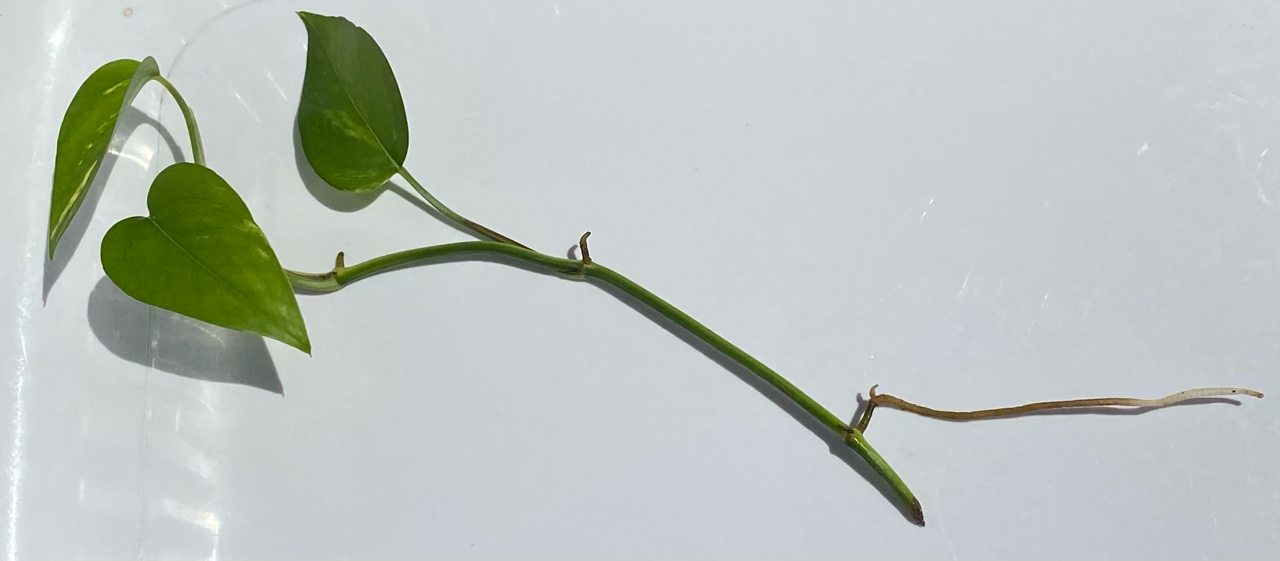
A pothos with its whole root system underwater for years is the same physics read from the other side: the water is oxygenated and resupplied, so the roots do not suffocate. The failure mode when it does go wrong is a coupled one rather than a simple drowning. A 2026 review of substrate-free hydroponics identifies two structural constraints, dissolved oxygen depletion in recirculating solution and susceptibility to Pythium root rot, and states that they are coupled through root zone oxygen status: progressive root mat development degrades aeration and creates hypoxia, which impairs root membrane integrity, alters the exudate profile, and facilitates zoospore encystment and the switch to necrotrophic attack.34 Oxygen falls, the root leaks food, the pathogen is invited in.
And the microbial side of a transplant is slower than anyone expects. Bacterial communities on pothos were tracked across an 86 day transition from soil to hydroponic culture, with 98 community profiles, and shifted continuously throughout.35 Not a week. Three months.
No root porosity, aerenchyma or anatomical figures have been published for Epipremnum aureum, Monstera deliciosa or any other common houseplant that we could find. The mechanism above is measured in grasses and crops. Applying it to aroids is a plausible extrapolation and it is labeled as one. The practical build, including what a houseplant on the rim actually does to the tank underneath it, is on the windowsill page.
- Ehrich, S., Behrens, D., Lebedeva, E., Ludwig, W. and Bock, E. (1995). A new obligately chemolithoautotrophic, nitrite-oxidizing bacterium, Nitrospira moscoviensis sp. nov. Archives of Microbiology 164(1): 16 to 23. Paywalled. The paper that named the organism, three years before it was found in fish tanks. DOI 10.1007/BF02568729
- Hovanec, T.A., Taylor, L.T., Blakis, A. and DeLong, E.F. (1998). Nitrospira-like bacteria associated with nitrite oxidation in freshwater aquaria. Applied and Environmental Microbiology 64(1): 258 to 264. Free on PubMed Central, PMC124703. No Nitrobacter detected, Nitrospira at nearly 5 percent of extracted RNA, and the failure of the dosed Nitrobacter product to establish. DOI 10.1128/aem.64.1.258-264.1998 open access
- Hovanec, T.A. and DeLong, E.F. (1996). Comparative analysis of nitrifying bacteria associated with freshwater and marine aquaria. Applied and Environmental Microbiology 62(8): 2888 to 2896. Free on PubMed Central. The freshwater and saltwater split, and the 20 percent figure for Nitrosomonas europaea-like RNA in marine filters. DOI 10.1128/aem.62.8.2888-2896.1996 open access
- Sauder, L.A. and others (2011). Aquarium nitrification revisited: Thaumarchaeota are the dominant ammonia oxidizers in freshwater aquarium biofilters. PLoS ONE 6(8): e23281. Open access. Archaea more numerous in 23 of 27 freshwater filters, sole detectable ammonia oxidiser in 12, and the inverse relation with ammonia concentration. DOI 10.1371/journal.pone.0023281 open access
- Daims, H. and others (2015). Complete nitrification by Nitrospira bacteria. Nature 528: 504 to 509. Free on PubMed Central. DOI 10.1038/nature16461
- van Kessel, M.A.H.J. and others (2015). Complete nitrification by a single microorganism. Nature 528: 555 to 559. The independent companion paper in the same issue. Free on PubMed Central. DOI 10.1038/nature16459
- McKnight, M.M. and Neufeld, J.D. (2024). Comammox Nitrospira among dominant ammonia oxidizers within aquarium biofilter microbial communities. Applied and Environmental Microbiology 90(7): e0010424. Open access. Thirty eight freshwater samples, comammox in all 38 and dominant in 30, and the absence of comammox from saltwater biofilters. DOI 10.1128/aem.00104-24 open access
- Burrell, P.C., Phalen, C.M. and Hovanec, T.A. (2001). Identification of bacteria responsible for ammonia oxidation in freshwater aquaria. Applied and Environmental Microbiology 67(12): 5791 to 5800. Free on PubMed Central. Four ammonia oxidising strains rather than one, the dependence of which strain wins on ammonia concentration, and the 2 percent or less of visible cells in an established tank. DOI 10.1128/aem.67.12.5791-5800.2001 open access
- Bagchi, S., Vlaeminck, S.E., Sauder, L.A., Mosquera, M., Neufeld, J.D. and Boon, N. (2014). Temporal and spatial stability of ammonia-oxidizing archaea and bacteria in aquarium biofilters. PLoS ONE 9(12): e113515. Open access. Six freshwater tanks over four months, and the freshwater against marine reversal. DOI 10.1371/journal.pone.0113515 open access
- Bartelme, R.P., McLellan, S.L. and Newton, R.J. (2017). Freshwater recirculating aquaculture system operations drive biofilter bacterial community shifts around a stable nitrifying consortium of ammonia-oxidizing archaea and comammox Nitrospira. Frontiers in Microbiology 8: 101. Open access. DOI 10.3389/fmicb.2017.00101 open access
- McKnight, M.M., Szabolcs, N., Graham, A. and Neufeld, J.D. (2025). Microbial community succession of home aquarium biofilters associated with early establishment of comammox Nitrospira. ISME Communications 5(1): ycaf212. Open access, PMC12704419. The 1.6, 3.1 and 3.8 percent sponge figures and the 0.6 to 14.1 percent bead range, the dominant heterotrophic genera, the twelve week succession, and heterotrophs assisting nitrifier establishment. DOI 10.1093/ismeco/ycaf212 open access
- Our own arithmetic. Not a published source. The "6 in 7" and "24 in 25" headlines are our rounding of the measured ammonia oxidiser fractions in source 11. That study measured 0.6 to 14.1 percent on bead media, so in the worst case 85.9 percent of the community are not ammonia oxidisers, which is 6 in 7. On the sponges it measured 1.6, 3.1 and 3.8 percent, so 96.2 to 98.4 percent are not, which is about 24 in 25. The headline quotes the weaker of the two so that it holds across every sample the study took. calculated, repeatable, unverified by a third party
- Tsuneda, S. and others (2001). Enhancement of nitrifying biofilm formation using selected extracellular polymeric substances produced by heterotrophic bacteria. Water Science and Technology 43(6): 197 to 204. Paywalled. Heterotrophs building the house. DOI 10.2166/wst.2001.0374
- Nogueira, R., Melo, L.F., Purkhold, U., Wuertz, S. and Wagner, M. (2002). Nitrifying and heterotrophic population dynamics in biofilm reactors: effects of hydraulic retention time and the presence of organic carbon. Water Research 36(2): 469 to 481. Paywalled, abstract free. The heterotrophic layer forming on top and cutting off oxygen. DOI 10.1016/s0043-1354(01)00229-9
- Michaud, L., Blancheton, J.P., Bruni, V. and Piedrahita, R. (2006). Effect of particulate organic carbon on heterotrophic bacterial populations and nitrification efficiency in biological filters. Aquacultural Engineering 34(3): 224 to 233. Author version free at Ifremer. The 30 percent and 50 percent nitrification losses and the doubling of attached bacteria. DOI 10.1016/j.aquaeng.2005.07.005
- Blackburne, R., Vadivelu, V.M., Yuan, Z. and Keller, J. (2007). Kinetic characterisation of an enriched Nitrospira culture with comparison to Nitrobacter. Water Research 41(14): 3033 to 3042. Paywalled, abstract free. The low cell yield and the oxygen half saturation constant behind the scarcity-specialist description. DOI 10.1016/j.watres.2007.01.043
- Abelho, M. (2001). From litterfall to breakdown in streams: a review. TheScientificWorldJournal 1: 656 to 680. Open access. Litterfall as allochthonous organic matter, retention and storage, the mechanisms of leaf breakdown, and the relative roles of fungi and bacteria. DOI 10.1100/tsw.2001.103 open access
- Woodruff, L.L. (1912). Observations on the origin and sequence of the protozoan fauna of hay infusions. Journal of Experimental Zoology 12(2): 205 to 264. Sheffield Biological Laboratory, Yale. The 24 flask design with sterilised hay and sterilised water controls, the finding that air is a negligible source, the sequence of appearance, maximum and disappearance, the 48 hour turbidity, the zoogloea, the temperature effect, and the sterility against microcosm sentence. DOI 10.1002/jez.1400120204. Public domain; full volume at archive.org public domain, full text free
- Rundell, E.A., Banta, L.M., Ward, D.V., Watts, C.D., Birren, B. and Esteban, D.J. (2014). 16S rRNA gene survey of microbial communities in Winogradsky columns. PLoS ONE 9(8): e104134. Open access. The oxic and anoxic stratification, the 18 week incubation under light, the depth biomarkers, the low diversity of the top layer, the founder effect of sediment source over cellulose source, and the hydrogen sulfide and ferrous sulfide explanation for black sediment. DOI 10.1371/journal.pone.0104134 open access
- Hem, J.D. (1985). Study and Interpretation of the Chemical Characteristics of Natural Water, 3rd edition. US Geological Survey Water-Supply Paper 2254. Public domain. Seawater sulfate at about 2,700 mg/L in Table 2 and world river water sulfate at about 8 to 11 mg/L in Table 3. pubs.usgs.gov PDF public domain
- Sandfeld, T., Marzocchi, U., Petro, C., Schramm, A. and Risgaard-Petersen, N. (2020). Electrogenic sulfide oxidation mediated by cable bacteria stimulates sulfate reduction in freshwater sediments. The ISME Journal 14(5): 1233 to 1246. Free full text via PMC7174387. The sulfide detection limits in two Danish lake sediments, the freshwater against marine sulfate gap, the sub-10 cm sulfate penetration, and methanogenesis dominating anaerobic carbon turnover in fresh water. DOI 10.1038/s41396-020-0607-5 open access
- Conrad, R. (2020). Methane production in soil environments: anaerobic biogeochemistry and microbial life between flooding and desiccation. Microorganisms 8(6): 881. Open access. The flooded soil redox sequence, and the statement that methanogenic breakdown of cellulose yields equal amounts of carbon dioxide and methane. DOI 10.3390/microorganisms8060881 open access
- Li, L. and colleagues (2025). Regulatory mechanisms of tannins on the decomposition rate of mixed leaf litter in submerged environments. Plants 14(19): 3064. Open access. The 140 day submerged experiment: the tannin classification threshold and the measured content of each litter species, the rise and peak at day 14, the residual increase at day 140, the dose response on decomposition rate, the enzyme and protein binding mechanisms, and the inhibition of nitrifiers with ammonium accumulation. DOI 10.3390/plants14193064 open access
- Winkel, A. and Borum, J. (2009). Use of sediment CO2 by submersed rooted plants. Annals of Botany 103(7): 1015 to 1023. Open access. The split chamber design, both tables above, the shoot to root area ratios, the tissue porosities, the radiocarbon transport result in Ludwigia, the saturating root concentrations, the sediment pore water range of 10 to 250 times air equilibrium, and the method caveats quoted here. DOI 10.1093/aob/mcp036 open access
- Greenway, H., Armstrong, W. and Colmer, T.D. (2006). Conditions leading to high CO2 (> 5 kPa) in waterlogged and flooded soils and possible effects on root growth and metabolism. Annals of Botany 98(1): 9 to 32. Open access. The measured production rates and partial pressures in flooded soils, and the modelling showing that a good aerenchyma connection vents carbon dioxide out of the root rather than trapping it. DOI 10.1093/aob/mcl076 open access
- Lenzewski, N., Mueller, P., Meier, R.J., Liebsch, G., Jensen, K. and Koop-Jakobsen, K. (2018). Dynamics of oxygen and carbon dioxide in rhizospheres of Lobelia dortmanna: a planar optode study of belowground gas exchange between plants and sediment. New Phytologist 218(1): 131 to 141. Open access at the publisher. The 3 mm oxygenated zone, the 2 mm depleted zone, the carbon dioxide maximum 2 mm further out, and the disappearance of the depleted zone within 2 hours of darkness. DOI 10.1111/nph.14973 open access
- Thursby, G.B. and Harlin, M.M. (1982). Leaf-root interaction in the uptake of ammonia by Zostera marina. Marine Biology 72(2): 109 to 112. Paywalled. The split chamber result: ammonium in the leaf compartment cut root uptake by 77 percent, ammonium at the roots did not reduce leaf uptake. Bibliographic record only; we did not obtain the full text and no DOI is asserted here.
- Ozimek, T., Gulati, R.D. and van Donk, E. (1990). Can macrophytes be useful in biomanipulation of lakes? The Lake Zwemlust example. Hydrobiologia 200: 399 to 407. Paywalled. The Elodea nuttallii result of 75 percent of the ammonium removed in 16 hours with the nitrate almost untouched. Bibliographic record only; we did not obtain the full text and no DOI is asserted here.
- Ferguson, A.R. and Bollard, E.G. (1969). Nitrogen metabolism of Spirodela oligorrhiza: utilization of ammonium, nitrate and nitrite. Planta 88(4): 344 to 352. Paywalled. Ammonium taken up fast and nitrate essentially ignored, under sterile conditions, which removes bacteria as an explanation. Bibliographic record only; we did not obtain the full text and no DOI is asserted here.
- Walstad, D. (2017, reissued 2023). Nitrogen Uptake by Aquatic Plants. Six pages, free, carrying its own fifteen item reference list to the primary literature. Cited here as the argument rather than as the evidence: the position that plants and nitrifying microorganisms compete for ammonium rather than queueing, the energetic accounting drawn from Wetzel's Limnology and from Hageman 1980, and her own caveat that nitrate still accumulates in planted tanks. Each underlying measurement is cited to its own primary source above. dianawalstad.com PDF open access
- Barko, J.W. and Smart, R.M. (1986). Sediment-related mechanisms of growth limitation in submersed macrophytes. Ecology 67(5): 1328 to 1340. Paywalled. The standard reference, over 450 citations, for the finding that macrophyte growth does not increase without limit with sediment richness. DOI 10.2307/1938689
- Yamauchi, T. and Nakazono, M. (2021). Climate-smart crops: key root anatomical traits that confer flooding tolerance. Breeding Science 71(1): 40 to 53. Open access, PMC7973492. The root porosity ranges for upland against wetland grasses under aeration and under oxygen deficiency. DOI 10.1270/jsbbs.20119 open access
- Guhr, T., Song, Z., Andersen, A.G., Jiménez, J. de la C. and Pedersen, O. (2025). Root morphology and anatomy respond similarly to drought and flooding in two wheat cultivars. Annals of Botany 136: 1239 to 1250. The 2.1-fold increase in aerenchyma to cortex ratio under both stresses, with reduced xylem investment. DOI 10.1093/aob/mcaf152
- Scott, S. and Villouta, C. (2026). Dissolved oxygen limitation and Pythium root rot in strawberry NFT systems: mechanisms, research gaps, and prospects for substrate-free production. Frontiers in Plant Science 17. Open access, PMC13212243. The coupling of oxygen depletion and root rot through root zone oxygen status, and the membrane, exudate and zoospore chain. DOI 10.3389/fpls.2026.1829367 open access
- Zhu, B., Wang, J., Zhang, X., Zhang, B., Li, Z. and Hao, L. (2026). A bacteria community sequencing data set from pothos (Epipremnum aureum). Scientific Data 13. Open access, PMC13065761. The 86 day soil to hydroponic transition and the 98 community profiles. DOI 10.1038/s41597-026-06677-7 open access
Continue
Where to go next.
Cycling and the bacteria
The practical version of nitrification: how a filter starts, and how long it really takes.
Chemistry
The ammonia equilibrium and the carbonate system the nitrifiers are consuming.
Succession, the egg bank and Lake Sevan
The same biology one scale up, from succession to Lake Sevan.
The Walstad method
Root uptake and substrate oxygen put to work, which is the whole of the Walstad argument.